



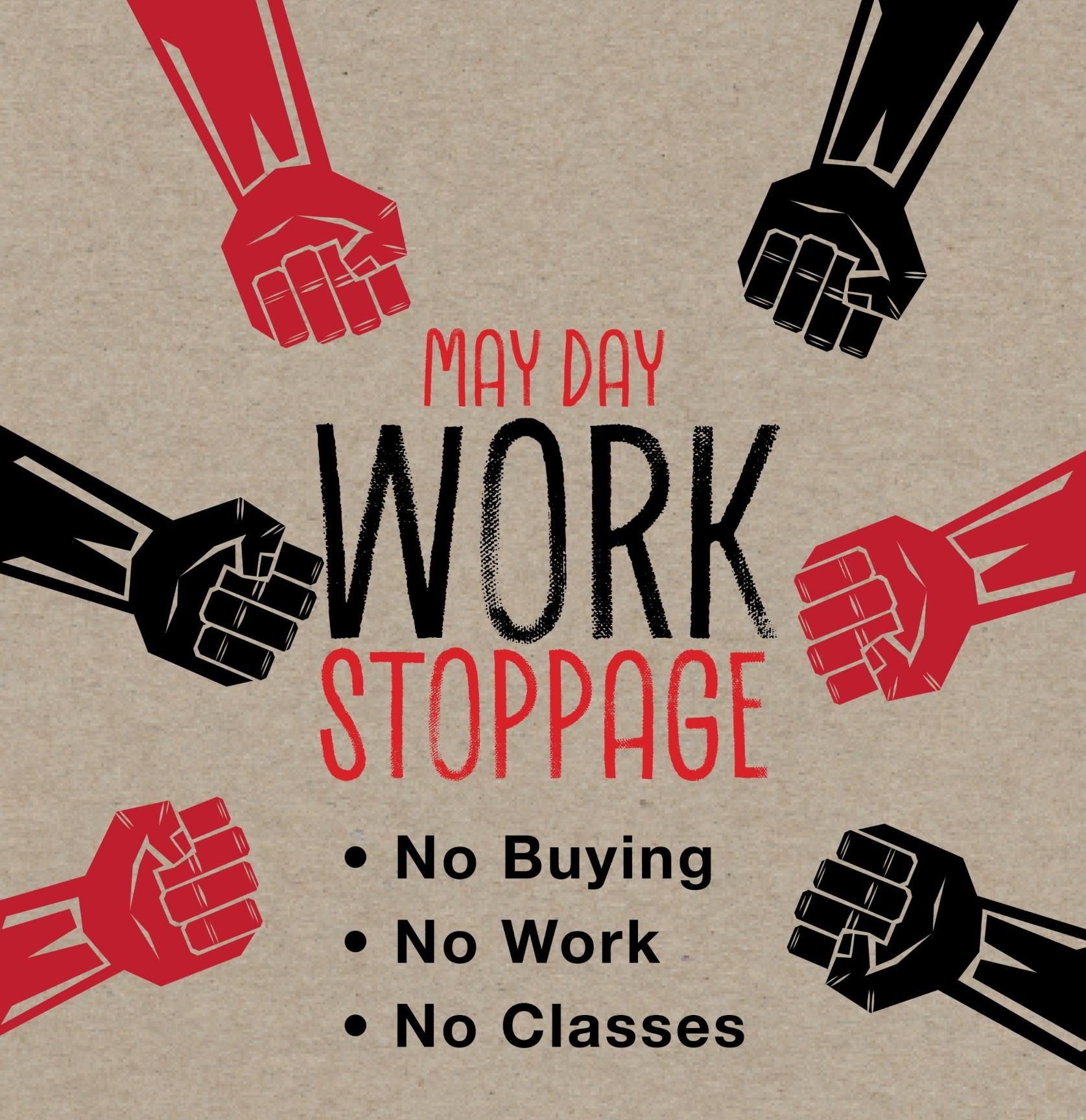
 May 1st, also known as May Day or Primero de Mayo, is celebrated worldwide as International Workers’ Day. Precisely because this day commemorates the struggles of working people, this is one of only a few commemorations that spans across borders and touches all humanity. This is rooted in two objective facts: first, because human labor continues to be the foundation of all material wealth on our planet, despite the global power of the capitalist class; and second, because durable socio-political change depends on global working-class struggle and solidarity. Every year on this day, there are huge demonstrations, marches, and rallies throughout Nuestra América and the world.
Unión del Barrio, in collaboration with sectors of organized labor, community groups, and independent organizations, proudly participates in this global day of action. We believe that only through an organized struggle grounded in working-class interests can we alter the course of human history imposed on us by a globalized ruling class. Individually, there is no way we can stand against the increasingly violent and exploitative attacks and repression unleashed by colonial-fascist finance capital across the globe.
2026 MAY DAY EVENTS IN
– LOS ANGELES –
– NORTH COUNTY SAN DIEGO –
– SAN DIEGO –
History & Analysis: MAY DAY AND THE HAYMARKET MASSACRE OF 1886
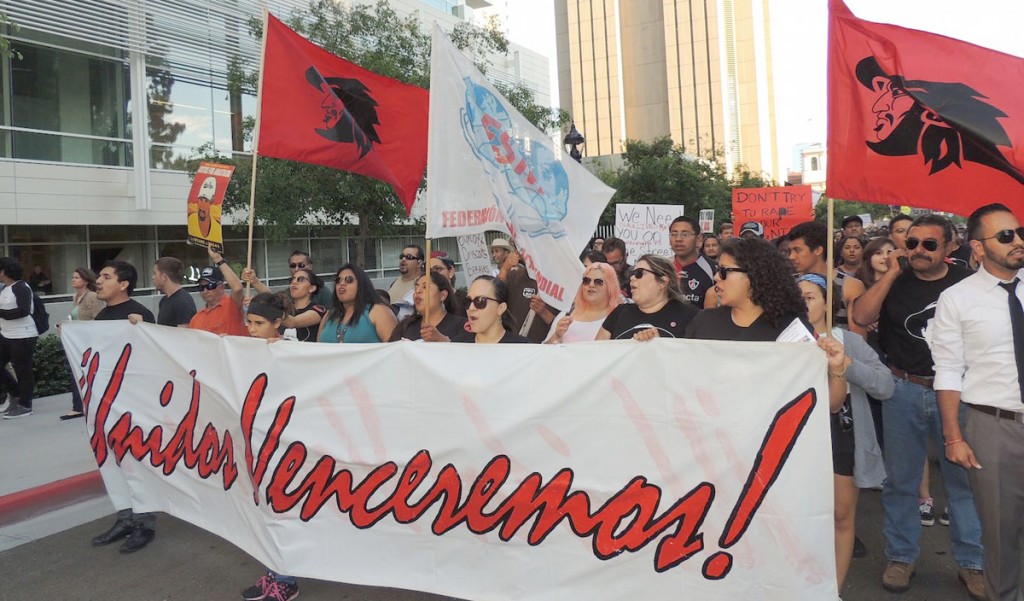
2015 Primero de Mayo // May Day. San Diego, CA.
“In 1884, the U.S. Federation of Organized Trade and Labor Unions had passed a law declaring that, as of May 1, 1886, an eight hour workday would be the full and legal workday for all U.S. workers… The owners refused.
“On May 1, 1886, workers took to the streets in a general strike throughout the entire country to force the ruling class to recognize the eight-hour working day. Over 350,000 workers across the country directly participated in the general strike, with hundreds of thousands of workers joining the marches as best they could.
“In what they would later call the Haymarket riots, during the continuing strike action on May third in Chicago, the heart of the U.S. labor movement, the Chicago police opened fire on the unarmed striking workers at the McCormick Reaper Works, killing six workers and wounding untold numbers. An uproar across the nation resounded against the government and its police brutality, with workers’ protest rallies and demonstrations throughout the nation set to assemble on the following day.
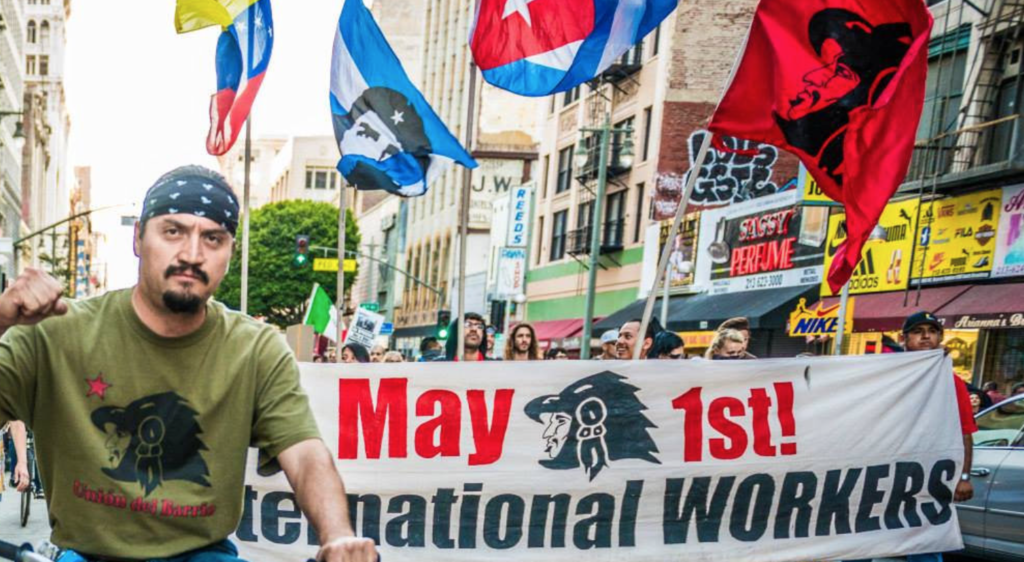
2015 Primero de Mayo // May Day. Los Angeles, CA.
“On May 4, Chicago members of the anarchist IWPA (International Working Peoples’ Association) organized a rally of several thousand workers at Haymarket Square to protest the continuing police brutality against striking workers on the South Side. As the last speaker finished his remarks that rainy evening, with only 200 of the most dedicated workers remaining at the rally, 180-armed police marched forward and demanded the workers to disperse. Then, deep within the police ranks, a bomb exploded, killing seven cops. The police opened fire on the unarmed workers – the number of workers wounded and killed by the cops is unknown to this day. Eight anarchists were arrested on charges of “inciting riot” and murder. The retaliation of the government was enormous in the days to follow, filling every newspaper with accusations, completely drowning the government murders and brutality of days past.
“Eight workers were convicted as anarchists, were convicted of murder, and were convicted of inciting a riot. Only one of the eight men accused was present at the protest, and he was attempting to address the crowd when the bomb went off. In one of the greatest show trials in the history of the working-class movement, no evidence was ever produced to uphold the accusations, though all eight were convicted as guilty. Four of the prisoners – Albert Parsons [then married to Lucy Gonzalez Parsons], August Spies, George Engel and Adolph Fisher – were executed, Louis Lingg committed suicide, and the three remaining were pardoned due to immense working class upheaval in 1893.
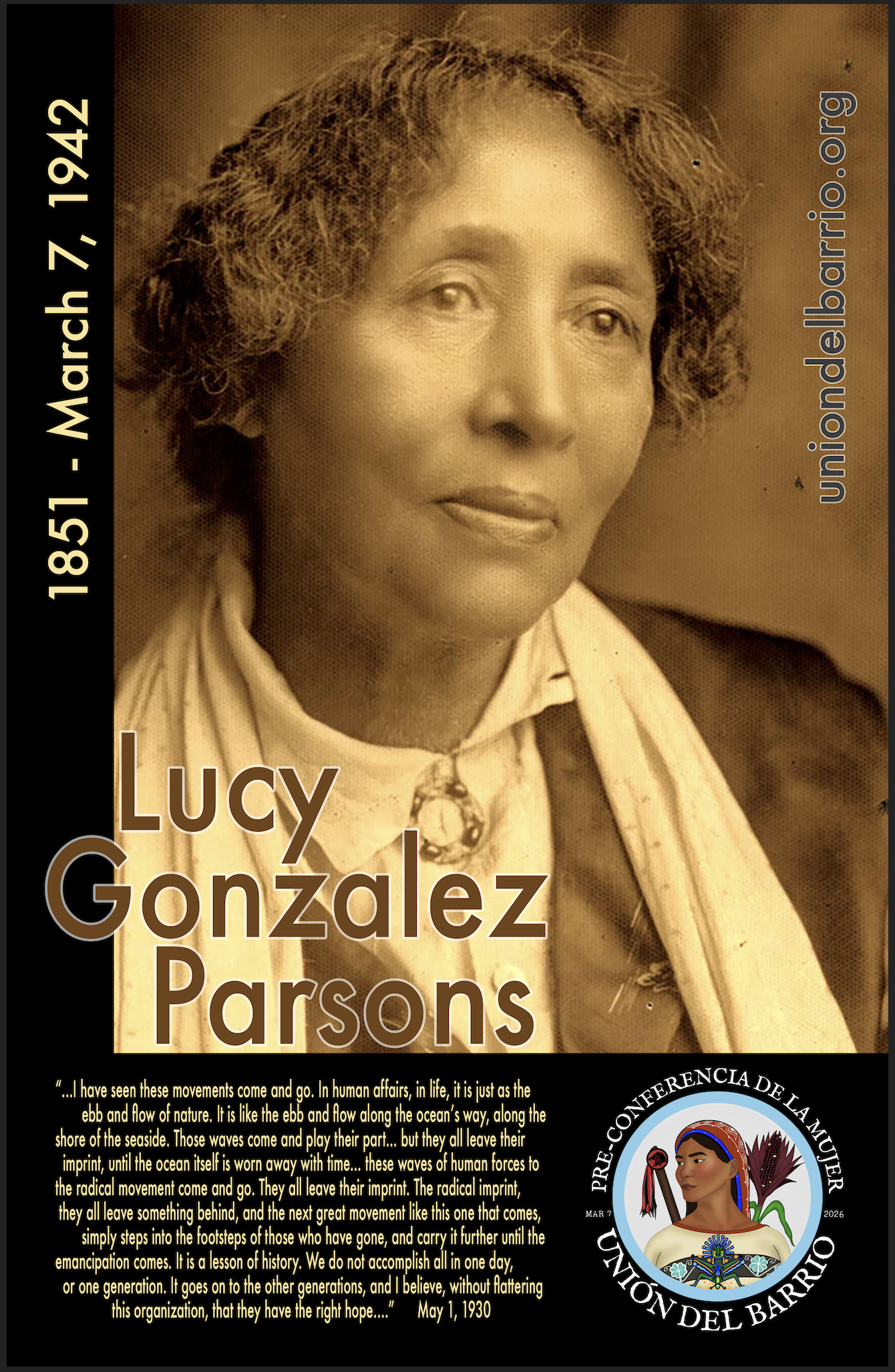
“On May 1, 1890, in accordance with the decision of the Paris Congress (July 1889) of the Second International to commemorate the Haymarket martyrs, mass demonstrations and strikes were held throughout Europe and America. The workers put forward the demands for an 8-hour working day, better health conditions, and further demands set forth by the International Association of Workers. The red flag was here created as the symbol that would always remind us of the blood that the working-class has bled, and continues to bleed, under the oppressive reign of capitalism.
“From that day forward… workers throughout the world began to celebrate the first of May as a day of international proletarian solidarity, fighting for the right of freedom to celebrate their past and build their future without the oppression and exploitation of the capitalist state.” (text from MIA: Encyclopedia of Marxism <https://www.marxists.org/glossary/events/m/a.htm#may-day>)
LABOR DAY IN THE UNITED STATES CELEBRATES A DOCILE AND CO-OPTED WORKING CLASS
Ironically, although the first May Day was in Chicago, within the United States, the official holiday for “work” is celebrated on the first Monday in September and is labeled “Labor Day.” A September “Labor Day” is only a national holiday in the United States, and it marks the end of summer vacation, with hot dogs and beer more common than rallies and marchas. International Workers’ Day, on the other hand, has no official standing within the U.S. government.
It should be no surprise that Labor Day was chosen over International Workers’ Day in the United States. Labor Day was always intended to erase working-class solidarity among people, and instead to commemorate the abstract idea of “work.” Labor Day is purposefully a celebration that separates “labor” from the “worker” that does the labor, thereby Labor Day can be used by those in power to simultaneously mask their wealth, celebrate their undeserved positions of power and privilege, and provide a holiday to those people whose labor is the source of all wealth. So on Labor Day every year, bosses and workers in the United States get a day off to celebrate their non-political, non-working-class BBQ that reminds them of a vague notion of disembodied “labor.”
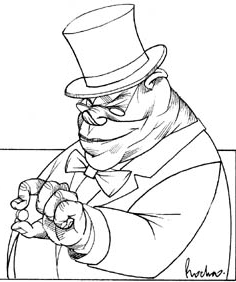 Labor Day in the US is not about class struggle. Labor Day is not about international solidarity. Labor Day within the United States is a day to celebrate the masking of the exploitative class character of capitalist society. Labor Day is, in fact, more about celebrating US workers who turn their backs on the memory and the struggles of the 1886 martyrs of Chicago, instead rooted in a neoliberal walmart mentality celebrating rich “job creators” and their loyal “associates.”
EL PRIMERO DE MAYO IS ABOUT STRUGGLE
May 1st, on the other hand, is a day of global working-class unity. International Workers’ Day is a celebration of working-class consciousness and resistance. May Day points to the source of human power that not only has the capacity to change history, but overturn the collective madness that is modern colonial fascism and capitalism: genocide, wars, generalized violence, global pandemics, environmental destruction, and unbelievable inequality throughout this world we belong to. Every May 1st represents the potential of coordinated resistance to the ruling class around the world.
Raza labor ensures that food is readily available. Raza labor ensures that homes are constructed, cleaned, and maintained. Raza workers care for their elderly. Raza workers care for the children of the wealthy before we take care of our own children. Our exploited labor is the basis of all economic growth in California and Texas, the two largest states in the U.S. by population and economic power. Furthermore, Raza workers are the majority population in New Mexico and will soon be (if not already) the majority population in Arizona, Nevada, Florida, Colorado, New Jersey, New York, and Illinois. This is to say, without La Raza’s domestic labor power, the U.S. economy would collapse. Even more incredible is the fact that not only is U.S. economic power dependent on our labor, but also Mexico’s economic growth, which situates working-class Raza as an essential pillar of the global economy and of industries worldwide.
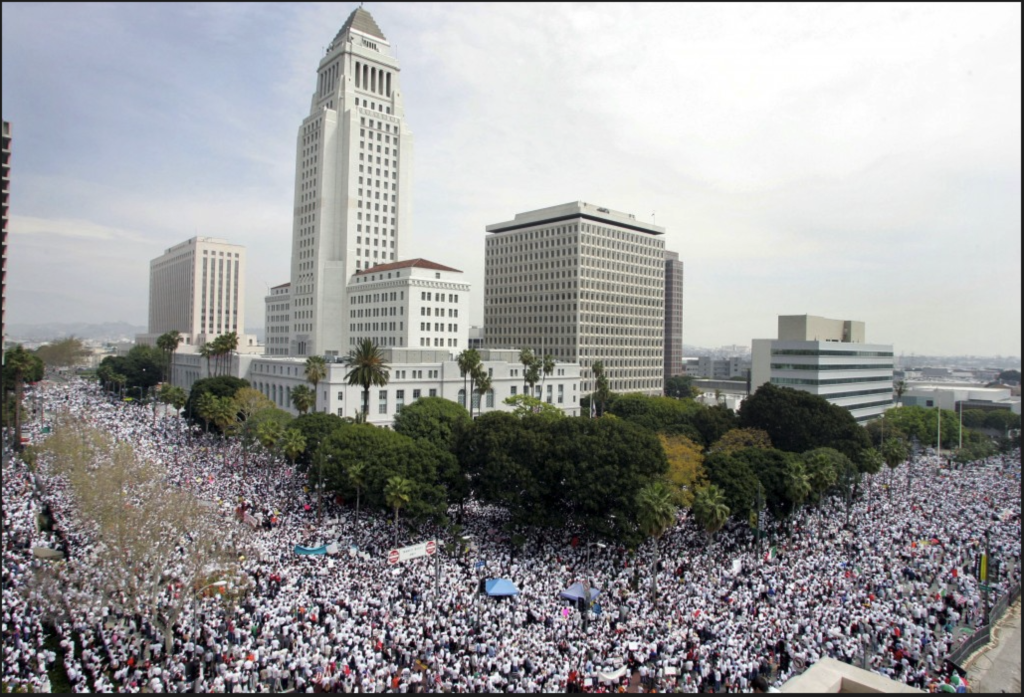
2006 Primero de Mayo // May Day. Los Angeles, CA. Image courtesy LA Times.
Of course, there have been annual May Day activities across the U.S. since 1887, but something changed in 2006. That year, millions of working-class Raza and allies came together to denounce H.R. 4437, the so-called Sensenbrenner Bill, the most aggressive anti-Raza federal law proposed during that period. It makes sense that it wasn’t until 2006 that May Day once again became a major day of national protest within the United States. These national 2006 actions were the largest mass protests in the history of the United States at that time, and they played a significant role in defeating the anti-Raza H.R. 4437 bill. Every year since then, May Day protests have taken place in every city across the United States. Yet, everywhere our communities are criminalized and brutalized by U.S. immigration policies that make it a crime to live and work. The U.S. government tears families apart using massive deportations as a policy of state terror intended to strike fear in our communities. The ruling class prefers that we remain docile as we work to maintain an elevated quality of life for those in power.
For these and many other reasons, Unión del Barrio steps up every May 1st to help build class-consciousness among workers throughout California and beyond. Every May Day, we rally and march as part of a day of global action, working-class solidarity, and barrio-based self-defense.
Let May Day, International Workers Day, be a day of Unity, Organization, and Struggle!
Help Put an End to Workers Exploitation! Organize and Participate!
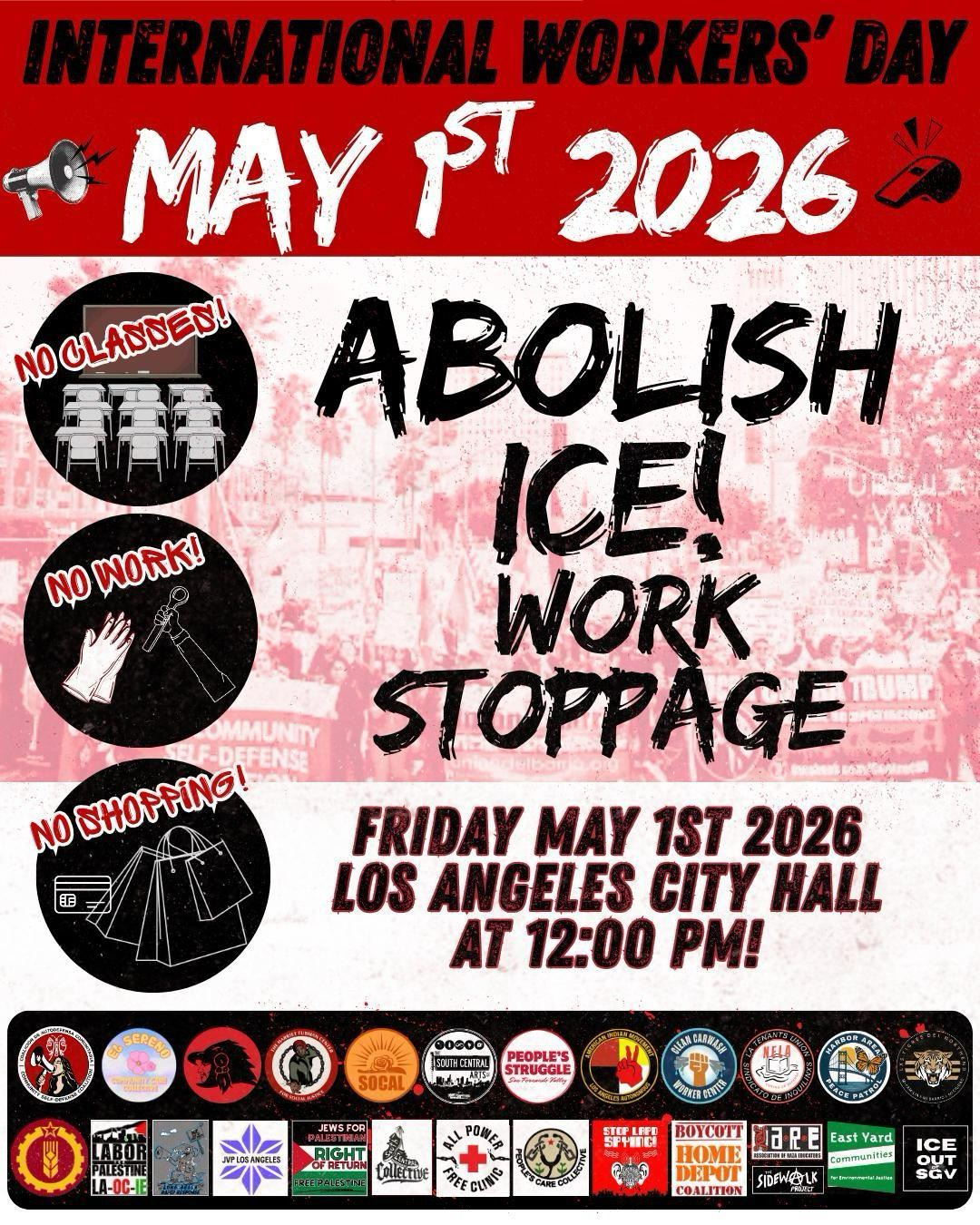
Links to UdB-Sponsored May Day 2026 Activities:
(haz clic aquí para las versiones en español)
________________
LOS ANGELES
 |
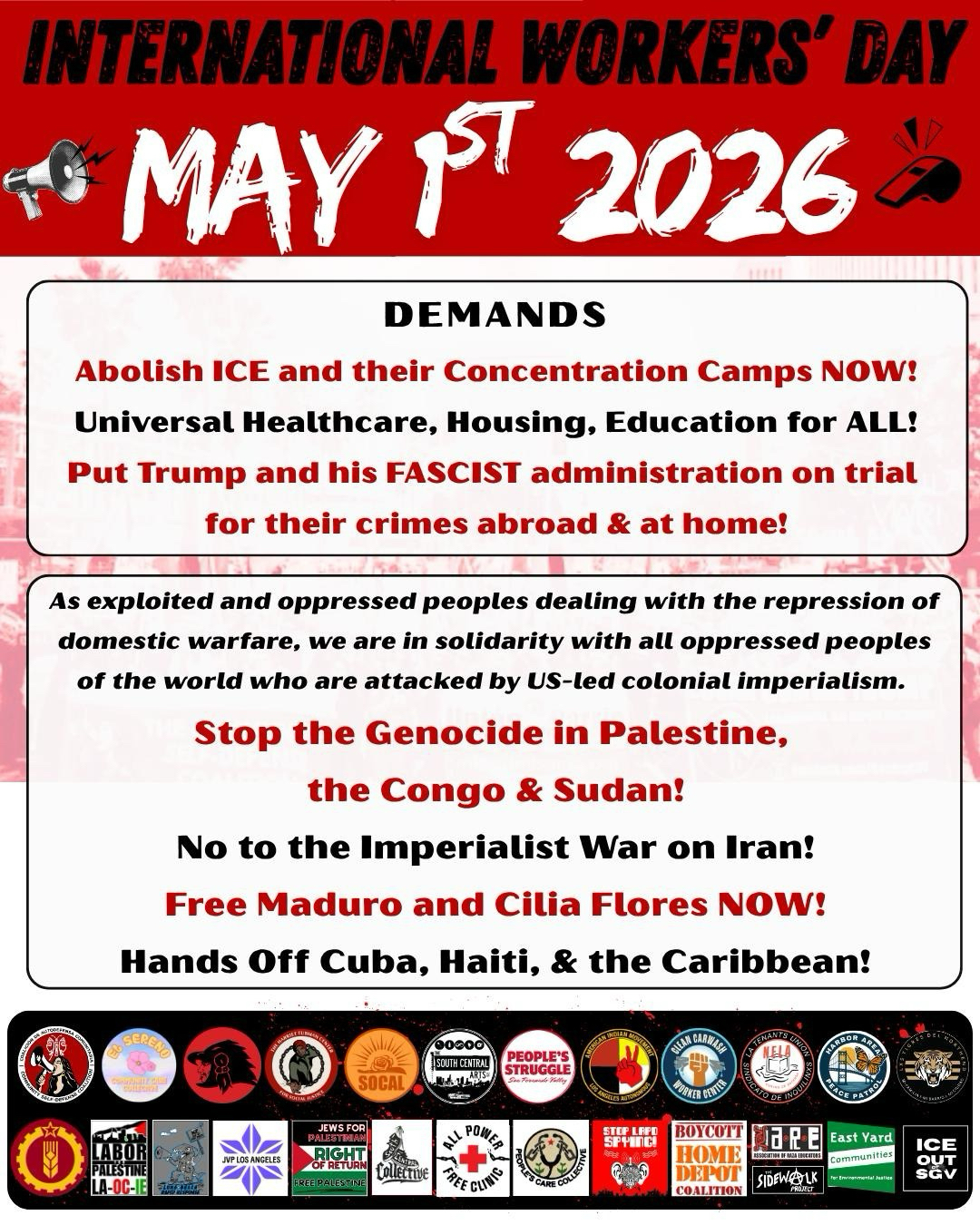 |
OCEANSIDE, CALIFORNIA
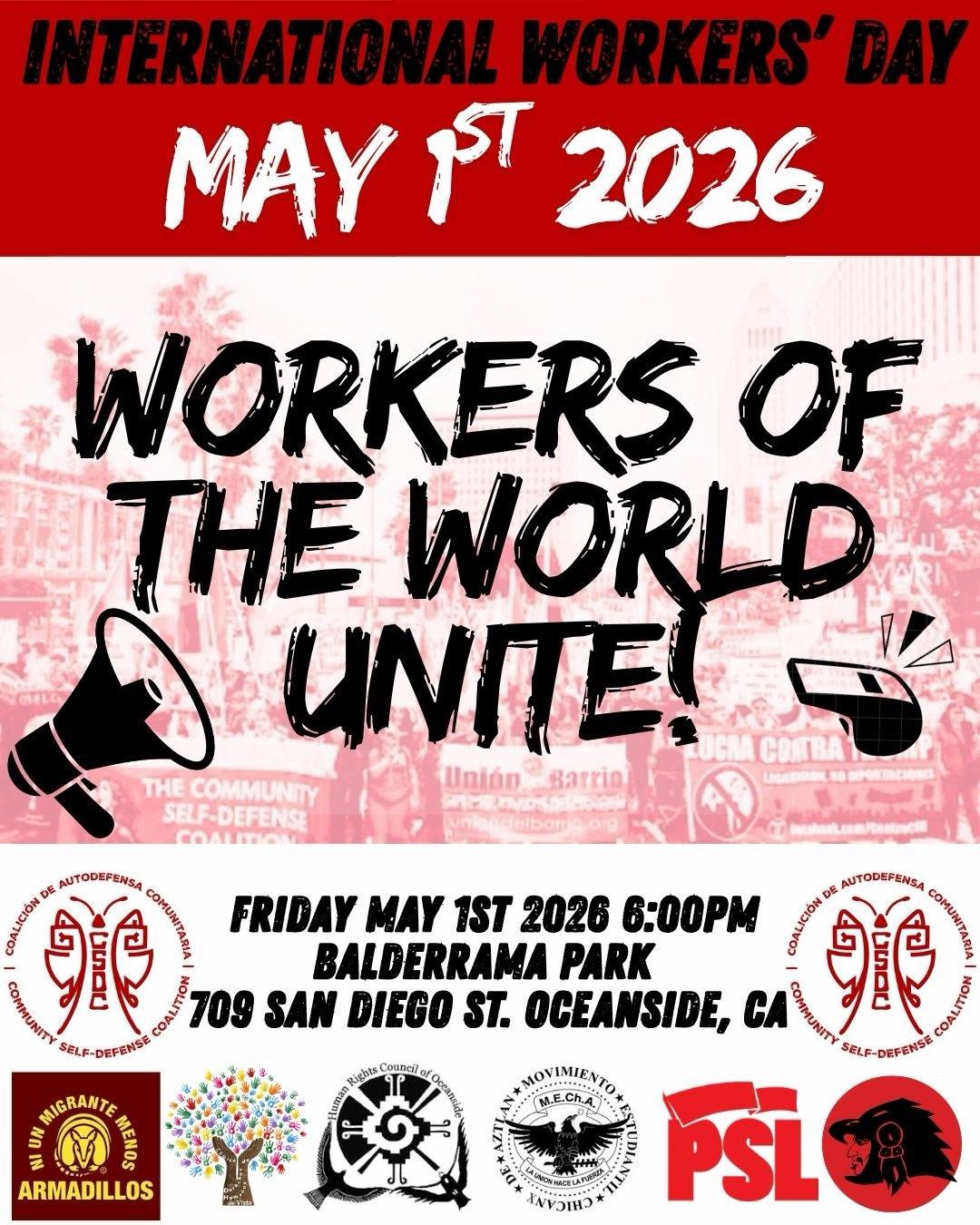 |
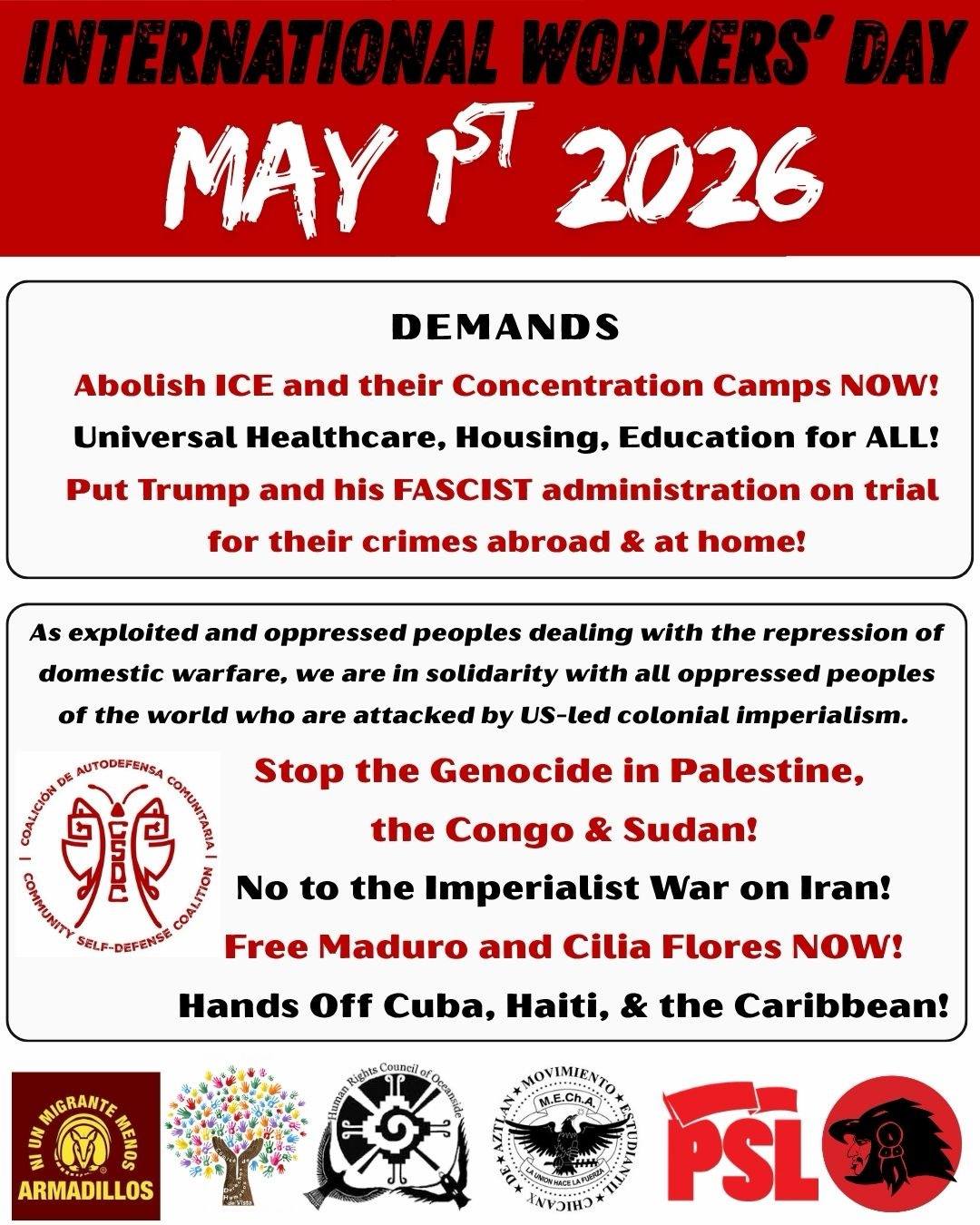 |
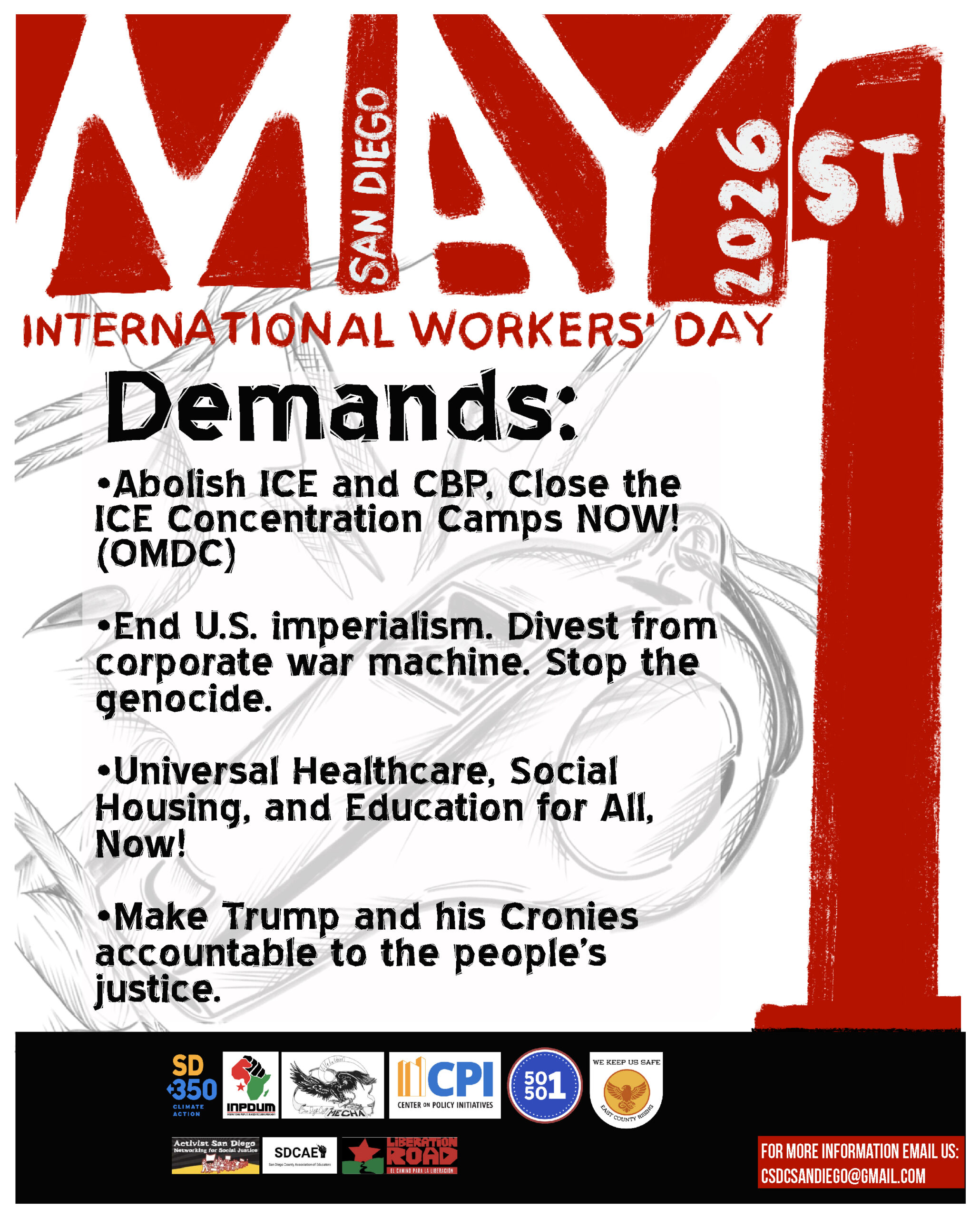
SAN DIEGO
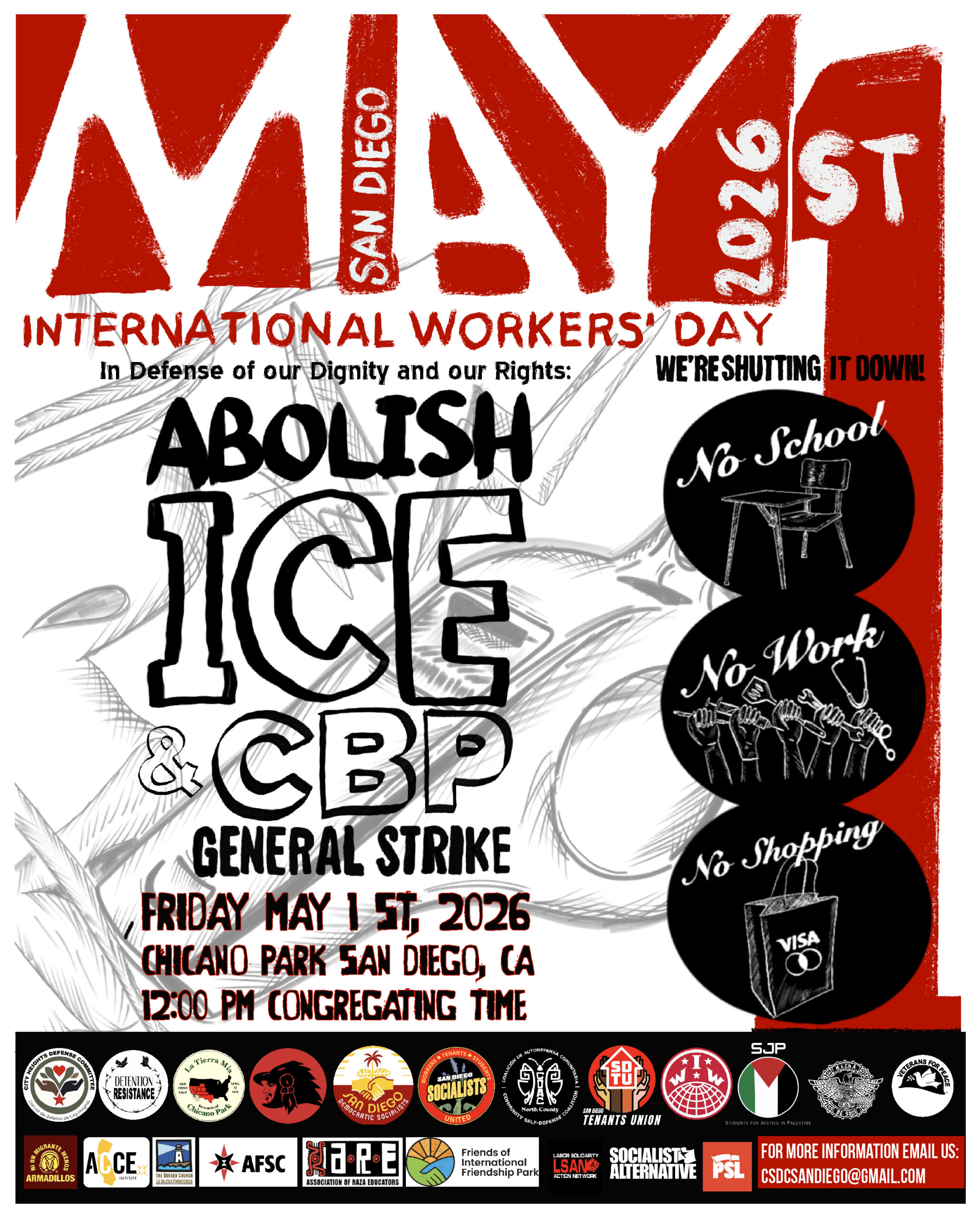 |
 |
Past May Day Actions:
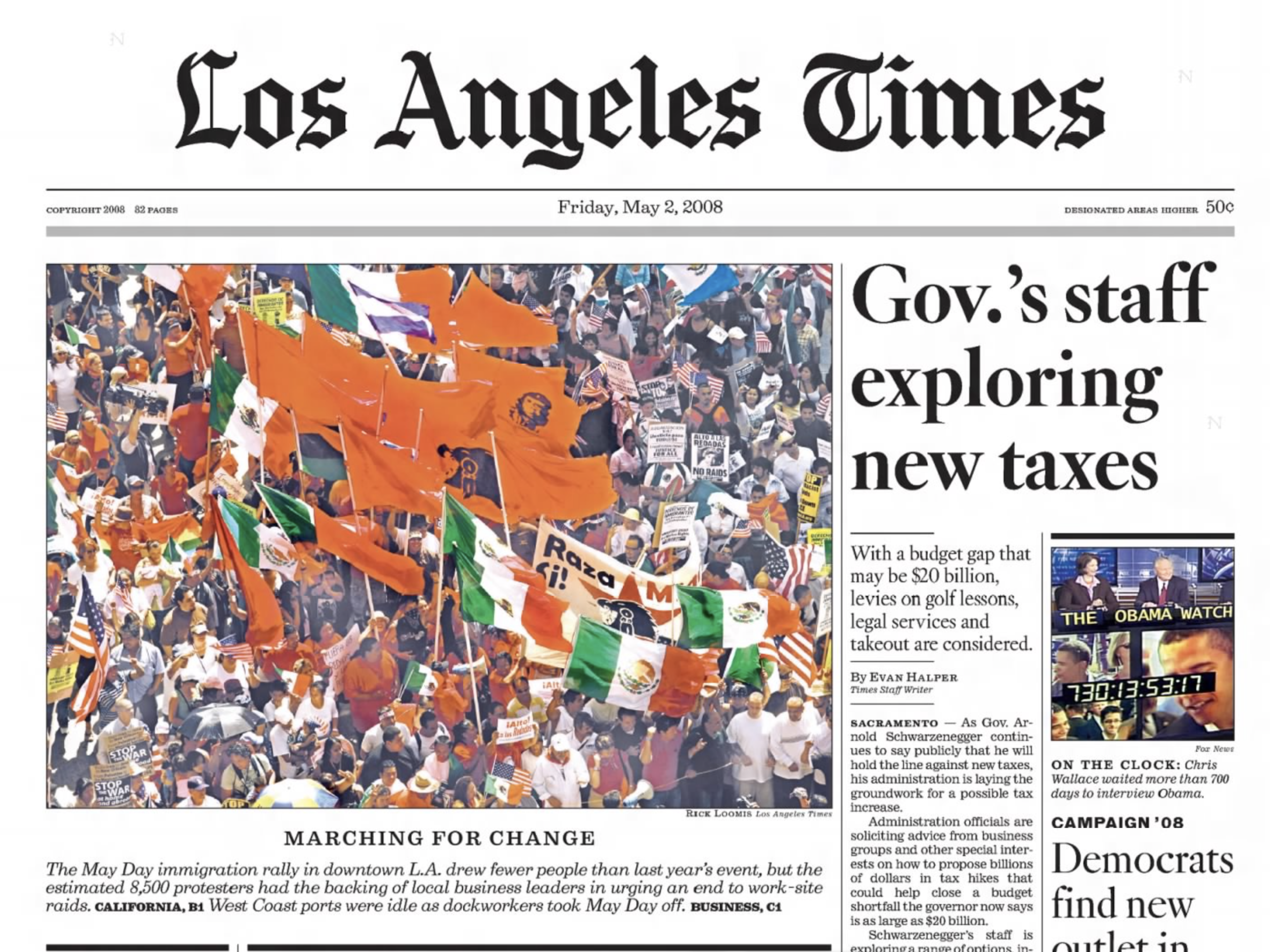
2008 Primero de Mayo // May Day. Los Angeles., CA. Image courtesy LA Times.
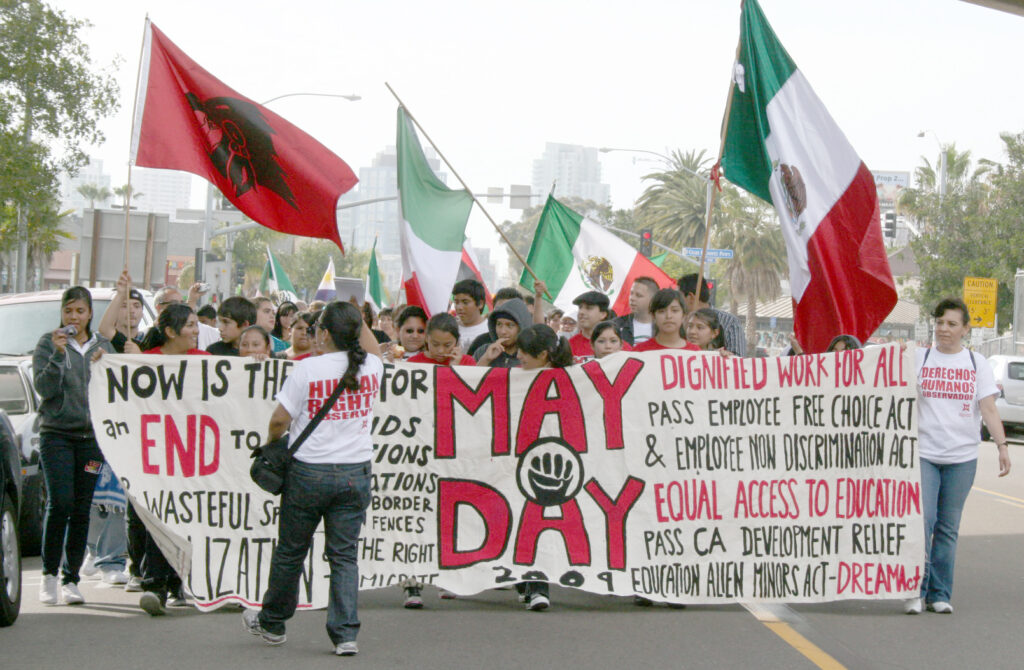
2009 Primero de Mayo // May Day, Chicano Park – San Diego.
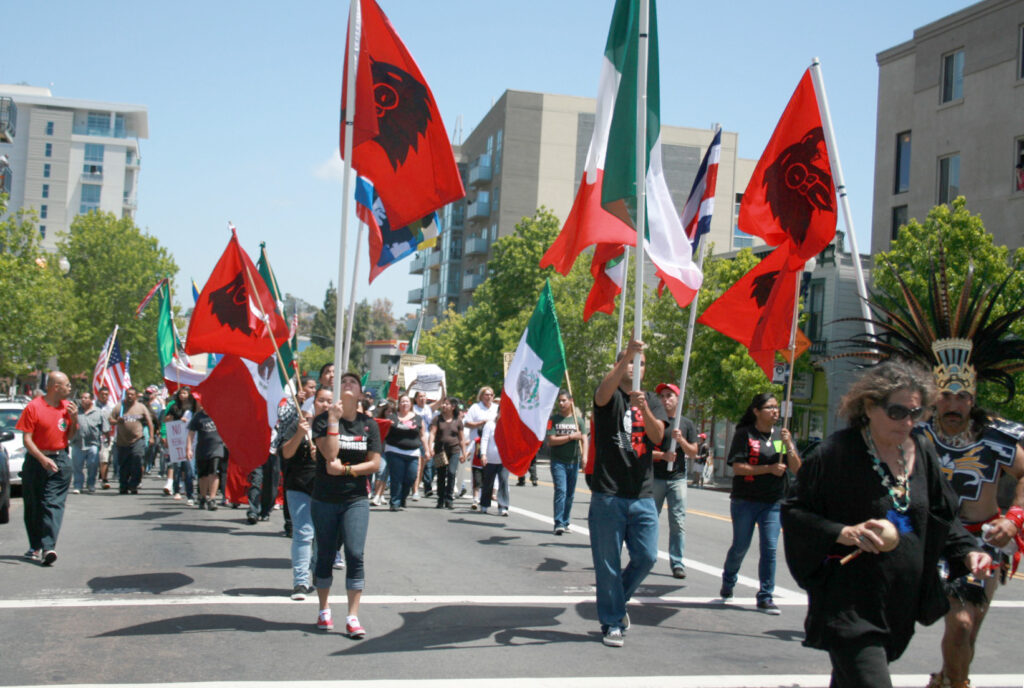
2010 Primero de Mayo // May Day, San Diego, CA.
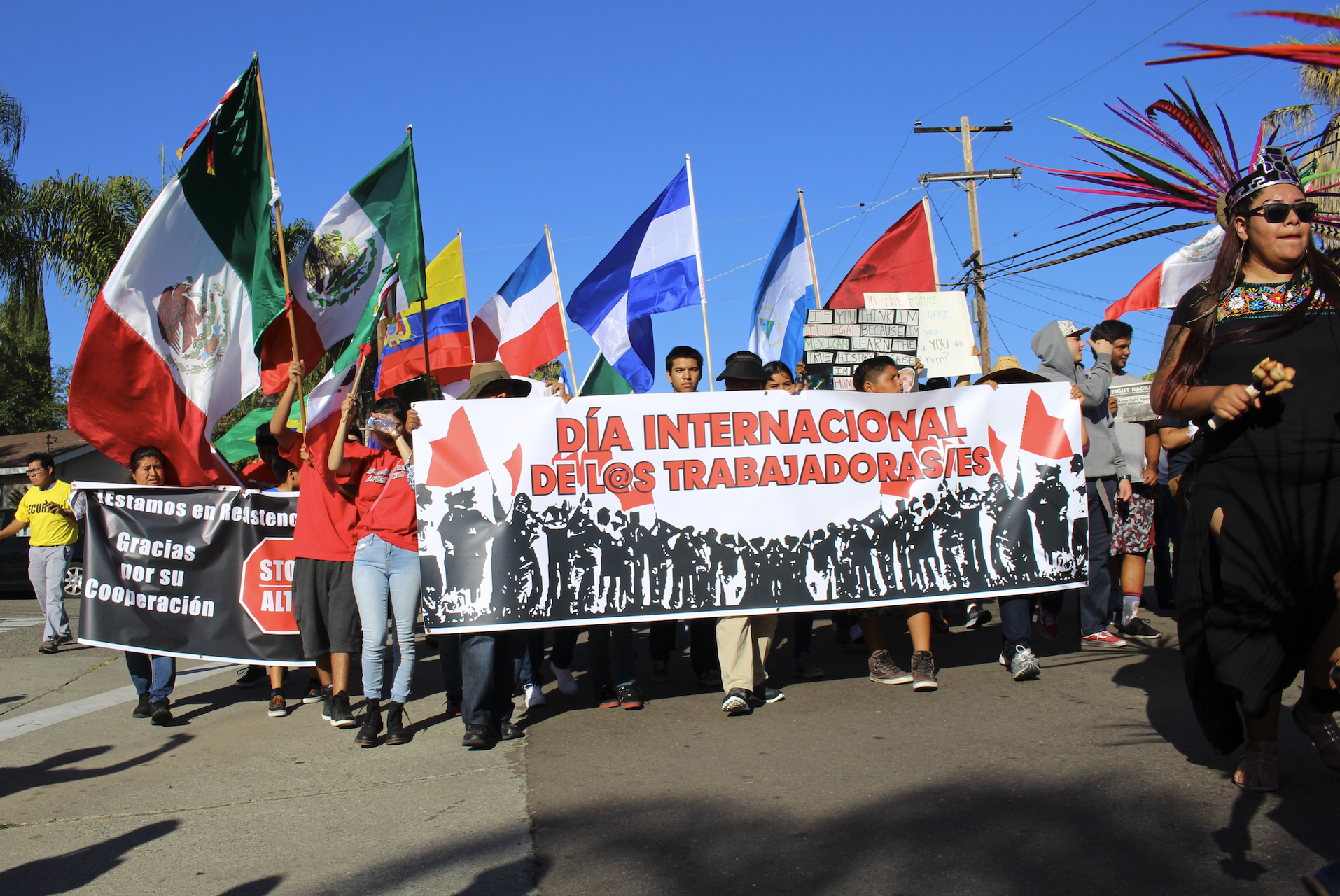
2017 Primero de Mayo // May Day. Vista, North County San Diego, CA
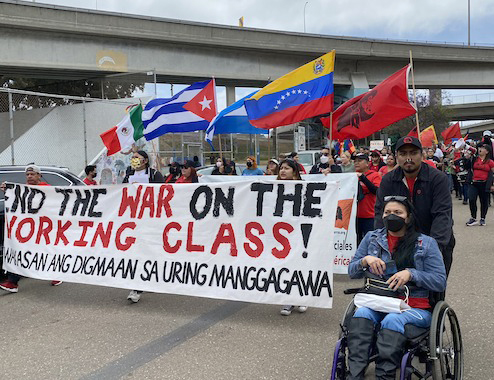
2022 Primero de Mayo // May Day, Chicano Park – San Diego.